

-
-
-
-
Quality Assurance
-


Dual AOI Inspection System: How Guangdong ONTE Electronics Ensures PCBA Quality
Guangdong ONTE Electronics uses two complementary AOI inspection systems – one for full‑coverage SMT and DIP component inspection (down to 0201 chips and 0.3mm‑pitch ICs), and another for RCL measurement and silk‑screen character verification – to deliver rigorous, zero‑defect PCBA quality for automotive, industrial, and medical applications.
Apr 18,2026
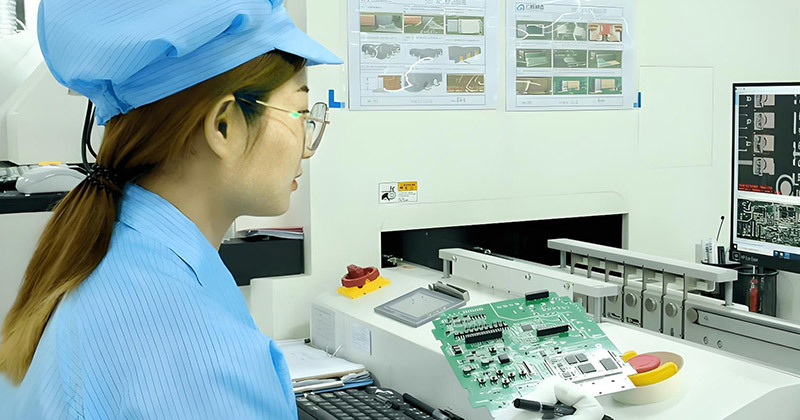
Guangdong ONTE Electronics understands the importance of inspection. To ensure the reliability of every PCB assembly, ONTE has deployed two different AOI systems that complement each other. Together, they form a rigorous and trustworthy quality defense.
First AOI: Full‑coverage component inspection (SMT to DIP)
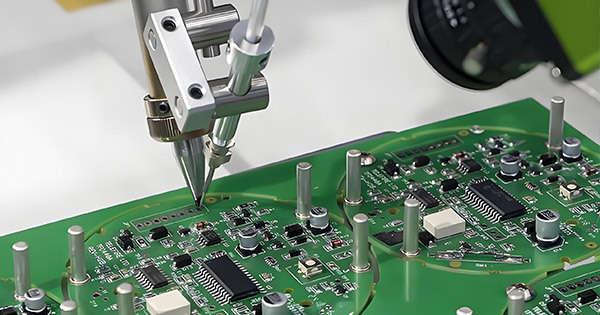
The first AOI machine is a high‑precision, wide‑range device. It inspects SMT components, red plastic components, and DIP plug‑in components – covering almost every part on a PCBA.
Key specifications:
- Resolution / Field of view / Speed: 10μm / 33×40mm / 150ms
The 10μm resolution captures fine details, while 150ms imaging keeps pace with production. - Smallest testable part: 0201 chip & 0.3mm‑pitch IC
0201 is an extremely tiny package in modern SMT assembly; 0.3mm pitch represents high‑density ICs. Being able to inspect these parts proves the machine’s advanced capability. - Maximum component height: 50mm
Tall components like electrolytic capacitors, relays, or connectors can be clearly imaged. - PCB size range: 50×50mm to 520×470mm
From small modules to medium‑sized control boards, all are accommodated.
This AOI detects common SMT defects such as missing components, polarity reversal, tombstoning, bridging, and shifting. It also handles red plastic components (e.g., some connector housings) and DIP parts effectively.
Second AOI: RCL measurement + silk‑screen character recognition
The second AOI machine focuses on electrical parameter verification and silk‑screen character inspection, perfectly complementing the first one. Its unique strength is the ability to quickly and accurately measure resistance, capacitance, and inductance (RCL) while automatically inspecting silk‑screen printed components such as ICs, diodes, and transistors (part numbers and polarity marks).
Key specifications:
- PCB size range: 420mm × 300mm
- Clearance above PCB: 28mm
- Clearance below PCB: 50mm
Why is this valuable? Ordinary optical inspection only tells you whether a component is present – not whether it is the correct one. For example, a 100kΩ resistor mistakenly placed as a 1kΩ resistor may look similar in color, and a standard AOI would miss the error. ONTE’s second AOI uses RCL measurement (contact or non‑contact) to directly verify the actual values of resistors, capacitors, and inductors. This eliminates wrong parts at the electrical level. At the same time, it automatically reads silk‑screen characters on ICs, diodes, and transistors and compares them with the internal library, ensuring correct model numbers and polarity.
Dual AOI: 1+1 > 2 rigor
Guangdong ONTE Electronics never settles for a single inspection method. The first AOI focuses on appearance and placement defects across large PCBs and tiny components. The second AOI specializes in electrical parameter verification and character recognition, solving the industry pain point of “wrong value / wrong part”. Working together, the two systems achieve a triple check: appearance + electrical value + marking.
This “no‑compromise” inspection configuration is the true reflection of ONTE’s commitment to quality. Every PCBA that leaves the factory must pass through both AOI machines, ensuring no hidden defect escapes. For demanding sectors such as automotive electronics, industrial control, and medical devices, ONTE’s dual AOI system provides solid reliability.
Choose Guangdong ONTE Electronics – where rigorous AOI inspection meets real‑world PCBA quality.






If you have any questions, please contact us!